Filed under Personal Finance

List of Top 10 Free Android Apps


Below is a list of my top ten favorite free Android apps. You might be asking yourself, ‘what does this have to do with personal finance?’ Well, that’s simple! All of the apps that I will share with you in this post are free. This, in turn, should save you money so that you don’t have to buy apps that do the same thing. Here is the list:

1. Mint – This is a simple to use money management app where you can view ALL of your finances in one place.
2. Craigsnotifica – Search for deals on Craigslist and be notified instantly when your criteria is met.
3. Amazon Appstore – Like Android Market, with an added bonus of one FREE (normally paid for) app per day.
4. Soundhound – Can’t figure out the name of a song or who sings it? Just fire this app up, sing the tune, and it will magically tell you.
5. Skype – My wife and I talked while I was in Cairo for FREE. This is an unbelieveable app if you are trying to keep in touch with someone oversees.
6. Lookout Mobile – This is a security app that has multiple features: virus scan, file back up, and you can even locate your phone if you lose it by logging in online in order to activate a loud siren on your phone.
7. Dropbox – Put your important files in the cloud and be able to access not only from your phone, but virtually any device that has internet.
8. Evernote – Tired of making notes in your phone, only to sell that phone a few months later and loose every note? You don’t have to worry about that any more with this app. It stores your notes in the cloud.
9. Amazon MP3 – Store all your music in the cloud and be able to access it anywhere, including your cell phone.
10. Google Translate – Speak into your phone in your language and it will translate it into your desired language.

If you have a favorite app that isn’t listed here, leave it in a comment below and I will be sure to check it out!

3 Ways YOU can Stimulate the Economy

If only it was easy as pressing a button, right? Unfortunately it is not “easy” but it is possible. I recently heard a quote from Mother Teresa that really hit home, “If each one of us would sweep our own doorstep, the whole world would be clean.” There are things that you and I can do to make our lives better and that could even make the lives of those around us better. Things that we are perfectly capable of and that are within reach. If we can each do our part to make our personal economy better, imagine how much better the world would be.

The first thing you can do to stimulate the economy is to donate UNUSED items around your house. Did you know that when you donate items to Goodwill, that that product is then sold for a profit, and then that money is used to create jobs. You want to see the unemployment rate go down? Then this is one thing you can do to make that happen.

The second things to do is pay off your debt. I know this sounds counter-cultural, as there are many financial professionals that say to never pay of your debt as long as you can get a better return elsewhere. Well, my response is that the average credit card rate in America is 14.75% according to www.CreditCards.com. You show me a place where you can get that kind of return without risk! If you pay of your debt, eventually you have more money to keep because you are not paying interest to a bank. In turn, you can take that money and buy goods and services.

Lastly you can clean up and repair the exterior of your house. The real estate market in America has taken a tremendous hit and it doesn’t help the cause when you the exterior of your house is a mess. Imagine going to look for a house to purchase and the neighboring houses have excessive weeds, paint chipping, trees that need to be trimmed, etc. You would think twice about living next door, right? I know I would.

Remember to sweep your own doorstep.

Emergency Savings Fund

Have you ever had your car break down? Have you ever had a water heater burst? What about an Air Conditioner that just stopped working in the middle of summer? If you said ‘Yes’ to any of these, you are not alone. I think you would be hard pressed to find somebody that has not had some sort of emergency situation happen to them in the past 5 years. This being said, there are many ways one can approach these situations from a financial perspective:

Put it on a Credit Card

According to a recent article at Bankrate.com, the average annual interest rate of a NEW credit card is 12.4%. Also, according to IndexCreditCards.com, the average household carries $7861 in revolving credit card Debt. This tells me that many people are using a credit card to cover their emergencies and that they are not paying it off every month. This, in turn, means that people are paying high interest rates just to cover life’s curve balls that are thrown at them.

Take out a loan

According to MSN Money, The average personal loan rate is 12.52%. This would put us in the same boat as if we used a credit card, in fact we would even pay a little more in interest going this route.

Pay Cash for it

I don’t know about you, but I have never paid interest on using cash. In fact, if you have a good reserve of cash in the bank you can make money on it while it just sits there. This seems to be the best course of action, put money in your pocket instead of another persons pocket.

This being said, you are probably wondering, “That is great in theory, but how do I get enough cash in the bank to cover an emergency if it happens?” Well, here are 3 things that I did that will be able to help you get to the minimum $1000 in the bank:

1. Sell stuff on Ebay and Craigslist

We were able to sell a ton of stuff online to get money for our emergency fund. You would be amazed at what kind of money you can get from selling Books, Movies, and Clothes that you dont need or use anymore.

2. Cut Your Expenses

We canceled our cable, stopped eating out as much, and changed some of our entertainment habits (See more about this here)

3. Combine Expenses

When we first got married, we had separate accounts for almost everything. We then combined our cell phones, car insurance, and life insurance providers which drastically reduced our expenses

A fully funded Emergency Savings Fund should have 3-6 months expenses, but you’ve got to start somewhere. Get $1000 in the bank and then come back and visit my next blog on the Debt Snowball made famous by Dave Ramsey.

Tagged ,

Spend Less Than You Make

You would think that this is a common sense, however, according to a Nilson report the average household carries $10,679 in credit card debt (Nilson Report April 2009). This tells us that instead of paying cash for something, Americans are buying stuff on credit cards and paying high and unnecessary interest on those purchases. According to USCourts.gov there were over 1.4 Million Bankruptcy’s filed in 2009. According to the FDIC, one out of every 200 homeowners will face foreclosure each year. I think you get the picture.

This is how we stopped this trend and I have found this is the best way to attack this with a vengeance:

1. Create a Cash Flow Plan aka a Budget

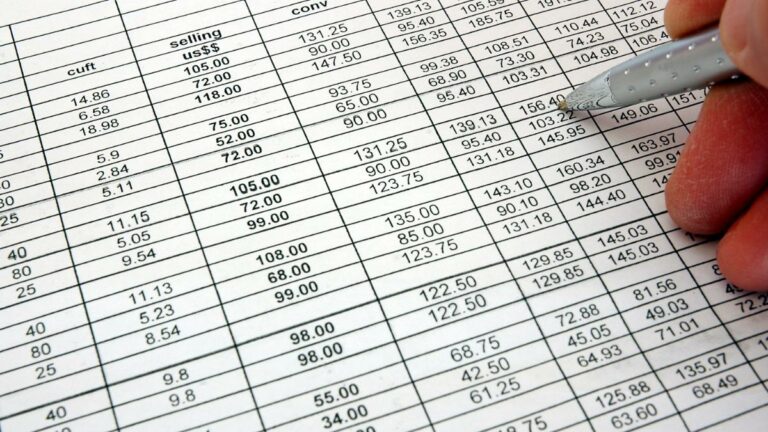
It is of the utmost importance that you track where every dollar goes, this way you can see where you might need to cut back. Here is a link to a standard budget form I created: General Budget Form

2. Use Cash not Credit Cards

I am not as die-hard as some that say you need to cut up your credit cards, but I will tell you that interest is a killer. According to CreditCardMonitor.com the average Credit Card interest rate is 16.28%. So if you don’t pay your card off every month, you are paying much more for you purchase then if you just use cash every month.

So you pay your Credit Card off every month, right? Well, A Dunn & Bradstreet study found that people spend 12-18% more when using credit cards than when using cash. It is Psychological, if you use cash to make purchases, you have a visible metric that when it is gone you have no choice but to stop spending. Credit Cards portray a bottomless pool to draw from at anytime, so a different spending pattern is developed.


Tagged ,

Personal Money Mangement 101

Now look, I am the first to admit that managing finances can be a boring task, however, that can all change. If you understand the basics of money management and how it will benefit you, that can be all the motivation you need to spend time doing it.

There are 3 principles that you need to understand when it comes to your finances:

1. Spend less than you make

It is built into our culture to buy, buy, buy. The problem is that more people spend more money than they bring in. Then they end up having to borrow money just to make ends meet. This is not a good fiscal plan.

2. If you have to borrow money, you can’t afford it

I had a friend recently tell me he could “afford the payment” on a new car. All that tells me is that he can’t actually afford the car. If you can’t pay cash for something, by definition you can’t afford it. If you have to resort to borrowing money to purchase something, I would think twice. A house is the only thing I would say doesn’t apply to this principle.

3. Make your money work for you

Investing is key to have a sound financial plan. Don’t depend on the government (or anyone else for that matter) to pay for your retirement. Take matters into your own hand. There are 2 main investments that I will focus on and they are: Real Estate and the Stock Market.

It is my goal to systematically break down these principles as well as others through this blog to give you a good resource to turn to when making major financial decisions. I will begin to tackle these principles and how to practically apply them to your life over the coming weeks, so stay tuned…

Purpose of this Blog

In Jim Collins book, Good to Great, he introduces the “Hedgehog Concept.” He tells a story of the Hedgehog and the Fox. The Fox is crafty and always looking for ways to pounce on the Hedgehog. However, time after time the fox is unable to take down the hedgehog. Why, you might ask? Because the Hedgehog is good at one thing, self defense. Every time the Fox tries to attack, the hedgehog just curls up into a ball and the fox gets poked when he jumps on the Hedgehog.

Why this story? This blog is my attempt to put this principle into practice in my own life. I desire to be really good at one thing, and as it turns out Personal Finance is just that. I enjoy taking people from where they are, to where they want to be. Stay tuned for the first blog regarding Personal Money Management.

Tagged ,
Follow

Get every new post delivered to your Inbox.