If you’re looking to make money with YouTube, you’re not alone. YouTube’s August 2026 figures show over 200 billion daily Shorts views, over a billion hours of watch time on TV every day, and over 3 million creators in the Partner Program.
YouTube is the second largest search engine on the planet, with over a billion hours of watch time on TV alone every day.
For people looking to make money on the internet, YouTube offers an opportunity to connect their content with the right audience and cash in.
But how much money can you really make on YouTube?
The highest-paid YouTube stars earn millions a year — for example, British gamer Daniel Middleton, who goes by the name DanTDM, posts videos of himself playing Minecraft.
While you may not be able to earn millions right off the bat, there are a few ways you can make money with YouTube.
Table of Contents
5 Ways to Make Money with YouTube
The good news about monetizing your YouTube channel is that your earning potential is not determined solely by the number of subscribers and views you have. It’s far more important to have an engaged audience in a targeted niche.
We talked about million-dollar video earner Daniel Middleton above, however, a more realistic but equally engaging YouTube success story is that of Ryan Scribner.
In October of 2016, Ryan started the Ryan Scribner YouTube channel.
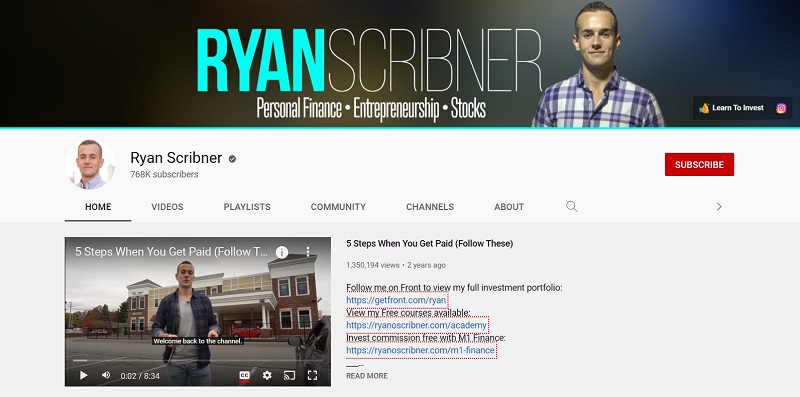
In less than a year, Ryan was able to quit his full-time job and focus solely on his YouTube channel and the blog he would eventually partner with it.
Just like making money with blogging, you can earn revenue even with a small YouTube channel by creating multiple revenue streams. Finding the right audience and targeting them with the right type of content can skyrocket your earning potential.
1. Make Money From Ads as a YouTube Partner
If you have what it takes to build a big following and gain subscribers quickly, becoming a YouTube Partner will be an easy way to cash in on your content. As a partner, you’ll earn revenue from companies that place ads throughout your videos.
This is a relatively passive income generating method that relies on getting enough traffic to your channel.
To join the YouTube Partner Program, there are two tiers. The expanded tier, for fan funding and Shopping (no ad revenue), needs 500 subscribers, 3 valid public uploads in the last 90 days, and either 3,000 qualified watch hours in the last 12 months or 3 million qualified Shorts views in the last 90 days; it unlocks channel memberships, Super Chat & Super Stickers, Super Thanks, Jewels and gifts, and Shopping (each feature has its own additional eligibility). The full tier, for ad and Premium revenue, needs 1,000 subscribers and either 4,000 qualified watch hours in the last 12 months or 10 million qualified public Shorts views in the last 90 days; Shorts Feed watch hours do not count toward the 4,000 watch-hour threshold. You must also follow the YouTube channel monetization policies, be based in a country where the Partner Program is available (the US is), have no active Community Guidelines strikes, have 2-Step Verification on for your Google Account, and link one active AdSense for YouTube account, created inside YouTube Studio. Apply in YouTube Studio, Earn, Apply Now; accept the base terms; link AdSense for YouTube; a decision typically takes about 1 month, and a rejected first application can be retried after 30 days (90 days for repeat rejections). From February 1, 2027, new creators will need 1,000 subscribers plus 8,000 qualified watch hours in the last 365 days, or 20 million qualified Shorts views in the last 90 days, for ad and Premium revenue. Creators already in the Partner Program keep their status, and the 500-subscriber fan funding and Shopping tier does not change. Existing partners must accept updated terms in YouTube Studio by January 31, 2027 to keep earning from those features. Also from February 1, 2027, earning from the Shorts Creator Pool in a given month requires at least 10 million qualified Shorts views in the last 90 days.
Niche Matters
The amount of money you’ll make from your ads does vary by niche as well. Ryan says that some niches, such as personal finance, pay more than other niches–even with the same number of views.
Keep that in mind as you choose your niche and try and grow your channel.
As a YouTube ad partner, you’ll need one active AdSense for YouTube account, created inside YouTube Studio, so you can opt in to Google’s advertising network and get paid. Once you’ve met the requirements, the setup is easy.
Under the Watch Page Monetization Module, YouTube pays creators 55% of net revenues from ads on their public videos’ Watch Pages — YouTube does not simply keep a flat 45% of everything. Monetizing content must follow the YouTube channel monetization policies and advertiser-friendly content guidelines, and only views of advertiser-friendly content are eligible for revenue sharing.
Shorts revenue works differently: each month, revenue from ads viewed between videos in the Shorts Feed is pooled; the pool is allocated to the Creator Pool based on engaged views and music usage (no music: all associated revenue to the pool; 1 music track: half; 2 tracks: one third); the Creator Pool is distributed by each creator’s share of total engaged views per country; creators keep 45% of their allocated revenue regardless of music use. Partners must accept the Shorts Monetization Module, and only engaged views on advertiser-friendly, original content count. YouTube Premium also pays you a share of a Premium subscriber’s fee when they watch your content. YouTube pays 70% of net revenues from channel memberships, Super Chat, Super Stickers and Super Thanks.
Fortunately, there are other ways you can leverage your channel to cash in, some of which don’t require a huge audience.
2. Sell Products or Merchandise
Selling products is a quick way to monetize your YouTube channel, even if you don’t have a large audience. There are a few different ways to go about doing this and making money in the process.
Some people sell physical products such as T-shirts, coffee mugs, tote bags, etc. that represent their online brand and personality.
You can commission affordable designs tailored specifically to the products you’re looking to sell through freelance sites such as Fiverr.
Another option is to sell digital products such as exercise routines, ebooks or online courses. You can direct customers to your website or an online store where they can purchase the products.
What you sell really depends on your niche and what resonates with your audience.
The big advantage of selling digital products is that you don’t need to worry about taking care of shipping and handling for the orders.
YouTube Shopping is another earning method. Creators can showcase and tag their own products (available in the expanded tier), and the Shopping affiliate program lets creators tag other brands’ products and earn a commission set by each merchant (paid through AdSense for YouTube, typically 60–120 days after purchase, reversed on returns).

3. Land Sponsorships for Your Channel
If you have a very targeted or niche audience that resonates with certain brands, getting a sponsorship deal may be a good way to cash in. This is where having an engaged audience can really pay off when trying to make money with YouTube.
Sponsors pay creators to promote or mention their products in their videos. This can be in the form of a lump sum, clicks on the company’s website, or on a per-view basis.
Keep in mind that sponsors will want to know where their products will be featured, for how long, in what context, and so on.
Ryan Scribner says that sponsorship opportunities will probably come your way automatically once your channel starts gaining serious success. However, he says it doesn’t hurt to approach companies you’re passionate about to inquire about potential sponsorship opportunities either.
4. Work With Brands as an Influencer or Affiliate
Becoming a brand influencer or an affiliate is a great way to make money with YouTube, even without millions of views. Influencer marketing is gaining traction and many YouTube creators use this income stream to support their channel.
If your brand is a good fit for a company, you can negotiate a good deal with a brand to promote them in front of your audience.
However, it’s important to be transparent with your audience and only endorse products that you believe in and support.
Affiliate Links
Another option is to become an affiliate for select brands. You’ll make money through commissions from sales you generate from your channel. This works especially well if you review products on your channel.
Ryan says one key to his success regarding affiliate income is that he’s very transparent about the affiliate connection in his videos. He’ll mention the opportunity to get a product or service by clicking on a link in the description of his video.
Ryan says that he chooses transparency in this area for two reasons: First, he wants to be entirely honest with his viewers in order to build authentic relationships with them.
Second, he finds that if he tells people they can support him by clicking on affiliate links, they’re much more likely to buy through the links because of the human nature we all have to want to help others. Especially when those “others” are providing valuable information to viewers.
5. License Your Content to the Media
Did you upload a video of your dog howling “Merry Christmas” and it went viral? You can license your content in exchange for money to TV news outlets, morning shows, online news sites, and so on.
If your video goes viral, other content creators may reach out to you to use it as part of a compilation. Alternatively, you can also list your videos in a marketplace such as Jukin Media (now part of Trusted Media Brands) where they will be easier for the right people to find and purchase.
Tips for Making Money on YouTube
Just like with other platforms, as your following grows and you gain a loyal audience, you’ll have more options to monetize. Learning how to make money with YouTube takes trial and error.
It’s important to take the time to figure out what works and what doesn’t for your specific audience.
However, here are a few pointers that will accelerate your growth and make it easier to monetize your content.
Grow Your Audience
Growing your audience on YouTube is extremely important. If you’ve got great content, you will find growing your audience easier. But Ryan suggests some other tips for growing your audience as well.
Ryan started growing his audience by reaching out to family, friends, and acquaintances and asking them to subscribe to his channel. After that, as a tactic at the time, he created a Twitter account (now X) — that was his approach back then, not a current recommendation.
He’d post links to his videos on X, and then he’d seek out followers of popular experts in his niche–personal finance.
He’d follow other experts’ followers, and then when they’d follow back, he’d send them a private message. Ryan would thank them for following him and share his YouTube channel link, asking them to subscribe.
Growth was slow at first. But eventually, his channel’s growth started to snowball. He had 100 subscribers after 7 weeks, 10,000 subscribers after six months and 100,000 subscribers after 14 months.
Know Your Demographics
Building a loyal audience who’s interested in your content puts you in a great position to monetize in a variety of ways. However, you need to understand the makeup of your audience so you can be very targeted in the content you create.
Advertisers are looking to reach a specific audience so the more niche your channel is, the better you’ll be able to make money down the road. Videos that appeal to someone in their 20s will likely not resonate with someone in their 50s.
Think about what the ideal person watching your videos looks like, wears, and does on a daily basis. Give them a name, face, profession, hobbies, etc.
This is your customer avatar, the person you’ll be targeting with your content. Identifying your avatar will help you monetize your channel faster and make it easier to create content that resonates with your viewers.
Get Targeted with Keywords
Since YouTube is a search engine, keep in mind that it relies on keywords to rank content just like Google does. Certain keywords are more valuable than others and demand a premium in terms of advertising dollars.
This is why it’s important to do your research and find keywords that are high in demand but lower in competition.
Use keyword research tools like KeywordTool.io specifically targeted to YouTube to find the keywords in your niche that will resonate with your audience and are also valuable to advertisers.
The more valuable the keyword, the fewer views you’ll need to cash in on advertising dollars.
Create Other Avenues to Direct to Your Channel
Eventually, Ryan started a blog called Investing Simple. He and his business partner started the blog to share powerful investing tips. Ryan also includes YouTube videos with many of his blog posts.
This technique helps drive traffic to his YouTube channel and thereby increase his income.
Go Full-Time When You’re Ready
Ryan quit his job to focus on his YouTube business full-time in June of 2017, just eight months after he started. He was only making $1,000 on his channel at the time, however, he had some safety measures in place before he quit.
For instance, he had $10,000 in an emergency savings fund. And he made himself a promise: If he blew through $5,000 of his emergency fund, he’d go get a job to supplement his income while he continued working on growing his channel.
Ryan also worked hard to minimize expenses by living with his mom. He cut costs where he could and lived frugally as he worked to grow and market his channel.
Luckily, his hard work and smart planning paid off, and he was able to grow his channel into a part-time business.
Summary
If you’re looking to make money with YouTube, don’t rely on advertising as your sole monetization strategy. Making money with a small channel is possible but it does require that you explore multiple earning opportunities.
Take the time to create quality, targeted content that speaks to your audience, and focus on building your brand.