Updated November 2026: Trim no longer exists as a standalone service. Trim joined OneMain Financial in 2021 and is now OneMain MyMoney. Anyone can sign up free to find and track subscriptions, but bill negotiation and subscription cancellations are now handled only for OneMain loan and Brightway credit card customers, and Trim’s old percentage-of-savings fee is gone. The review below describes the original Trim service for reference.
When it comes to budgeting and finding ways to spend less, this is a chore no one likes. One way to lighten your load is to lower your cable, internet, and phone bills with an app called Trim.
Trim was a bill negotiation and subscription cancellation service that helped people lower cable, internet, and phone bills and cancel subscriptions they no longer wanted. It is now OneMain MyMoney, and there is no longer any percentage-of-savings fee.
Table of Contents
What is Trim?
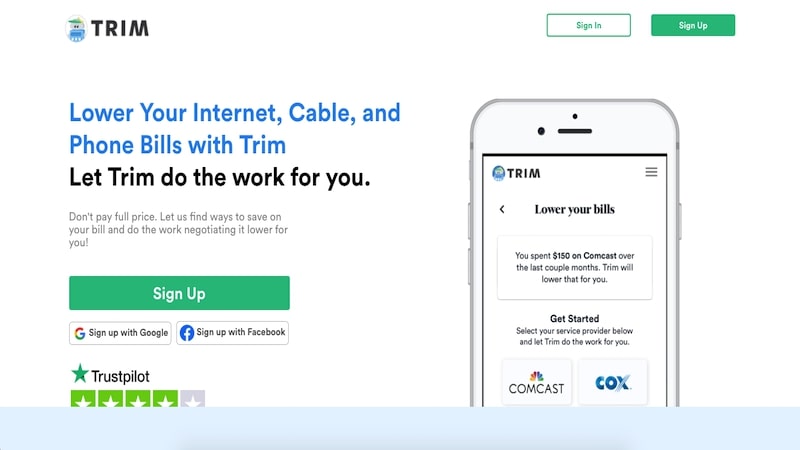
Trim is sort of like the personal assistant you’ve always wanted but could never afford. It’s an automated service that reviews your bills and receipts and helps you negotiate and save money. It scans your emails for receipts and can check for recurring subscriptions you no longer want.
Trim is now OneMain MyMoney. Signing up is free, and it analyzes your transactions to find recurring subscriptions. Bill negotiation and done-for-you cancellations are free, but only for OneMain loan customers and Brightway credit card customers. Everyone else can track subscriptions in MyMoney and cancel them themselves, or use another service such as Rocket Money.
Trim wants to help streamline your finances by canceling unwanted subscriptions you may have signed up for or forgotten about. Or maybe you didn’t even know you signed up. Which brings us to…
Trim Helps With Unclear and Unwanted Subscriptions
You might be thinking, how could you not know if you signed up for a subscription? There are a variety of reasons this may happen — sneaky marketing tactics by companies that make you click a button to opt out, your own forgetfulness, or pure laziness that keeps you from double-checking which subscriptions you signed up for.
This happens even to the smartest and most budget-savvy among us. I’ve been guilty of this not once, but twice.
The first time was years ago (way before free credit scores were easy to get) when I signed up for a free credit score and didn’t realize I had opted in to a $19.99 monthly subscription.
Yes, $19.99! I believe this was to cover the costs of credit monitoring and to get my credit report. I didn’t realize this was even happening until I checked my credit card statement and saw a mysterious charge from an obscure financial company.
I quickly called to cancel the subscription and vowed never to let it happen again.
I Wasted $240 on Another Subscription
The second time this happened was very recently. I’m embarrassed to admit this, but I signed up for a free trial for an audiobook subscription (separate from the paid Audible subscription I already had).
Once the free trial period ended, they started charging me $20 a month. For some reason, I thought I was being charged by Audible, but it was actually a different company charging me for a different subscription.
This went on for almost a year before I caught the error.
So, what were the lessons here? One is to never sign up for free trials that ask for your credit card number. And two, always check your credit card statements and know what subscriptions you have.
I didn’t even use that audiobook app and paid $240 for nothing. I did not get my money back.
Had I signed up for Trim at the time, I might’ve noticed that subscription alongside my actual Audible subscription and realized they were not the same a lot sooner.
To prevent this from ever happening again, I use Trim and created a simple Google Excel spreadsheet that lists all of my recurring monthly subscriptions.
The list includes the monthly fee and the credit card linked to that subscription. I look through this list every few months to see if there’s anything I want to cancel.
Trim Fights Gray Charges
Have you ever heard of something called gray charges?
These are fees you pay with your credit or debit card for unwanted services that are automatically renewed or converted from a free trial to a paid subscription. They also include hidden fees.
Forbes reports that gray charges are costing U.S. consumers $200 to $300 a month!
You may receive gray charges from things like magazine subscriptions, automatic renewals, or free services that switched to paid without your knowledge.
Other gray charges include:
Ghost subscriptions: These are subscriptions you signed up for while checking out for a different purchase.
Nuisance charges: Charges you once canceled, but that somehow end up back on your credit card.
Freemium model: This is when the free version of a trial ends, and you’re charged an automatic fee each month.
Cost creep: When the original cost of a product or service goes up without you knowing.
The Story Behind Trim
The founders of Trim, longtime friends Thomas Smyth and Daniel Petkevich, compared their credit card statements and both realized they were subscribed to various services they no longer used.
A Wall Street Journal subscription and a renters insurance policy were examples of a few unwanted items they shouldn’t have been paying for, but somehow were.
Given Smyth’s experience in investing in fintech companies such as NerdWallet, CoverHound, and Ripple, the two decided to start Trim. They wanted to automate to save consumers money.
Using the chat feature that companies like Comcast use for customer service, Smyth was able to save his mom almost $40 a month.
What Bills Are Negotiable?
Trim could negotiate your bills for you as well as:
- Lower cable, internet and phone bills by up to 30%
- Analyze your spending so you can easily understand where your money goes
- Flag recurring charges to find out if you have any unwanted subscriptions you forgot about
- Provide personalized recommendations for various financial products
Trim reports a 70 percent success rate at lowering customers’ bills.
Here is a list of cable companies that Trim could negotiate with:
- AT&T
- CenturyLink
- Comcast
- Cox
- DirectTV
- Dish Network
- T-Mobile
- Verizon
- Time Warner
- Sprint
- Google Fiber
Trim Saved Me $25 Almost Immediately
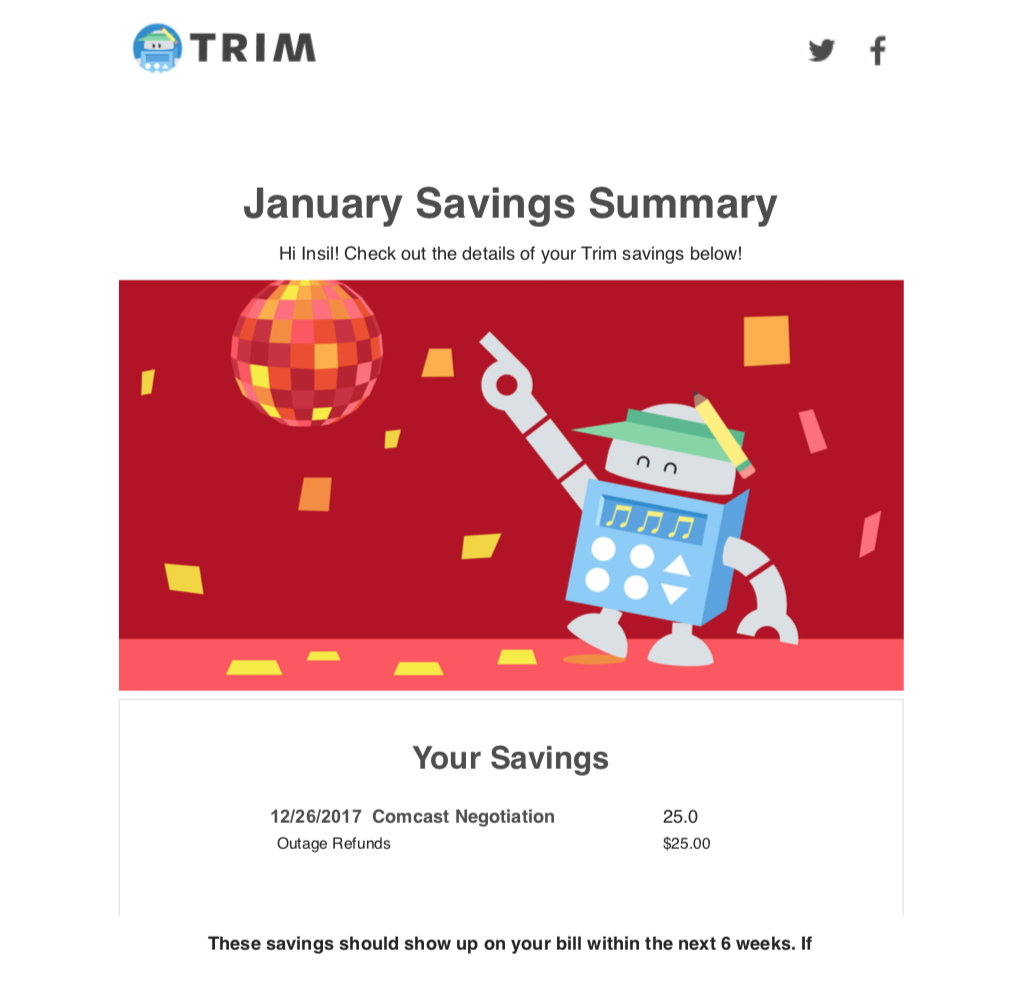
I first learned of Trim in 2017 and decided to sign up because it was free and I’d heard good things from colleagues and friends. I signed up in Dec. 2017 and have used it ever since.
Within a few weeks of me signing up, much to my surprise and delight, I received a text from Trim saying it was able to negotiate a one-time discount of $25 on my Comcast cable bill!
Trim’s Features
If you’d like bills negotiated on your behalf, all you need to do is provide Trim with the bill after logging in. Once Trim has that information, it may notify the biller on your behalf.
At the time, the catch was that if Trim successfully negotiated a lower bill, it took 33% of the total yearly savings. So, if it saved you $10 a month for 12 months, it would take $40. That percentage-of-savings fee no longer exists, and bill negotiation in OneMain MyMoney is now free, but only for OneMain loan and Brightway credit card customers.
Besides bill negotiation, Trim offers a number of other ways to help you save money. Here are more features from Trim.
1. Set Up Text Alerts with Trim
You can use Trim to set up text alerts that prompt you whenever you have a low balance, similar to services offered by some banks.
For example, maybe you want to know when your account has less than $500.
Setting up an alert may not directly save you money, but it may help you avoid late fees and overdraft charges by letting you know how much money you have in your accounts.
2. Save on Energy Bills
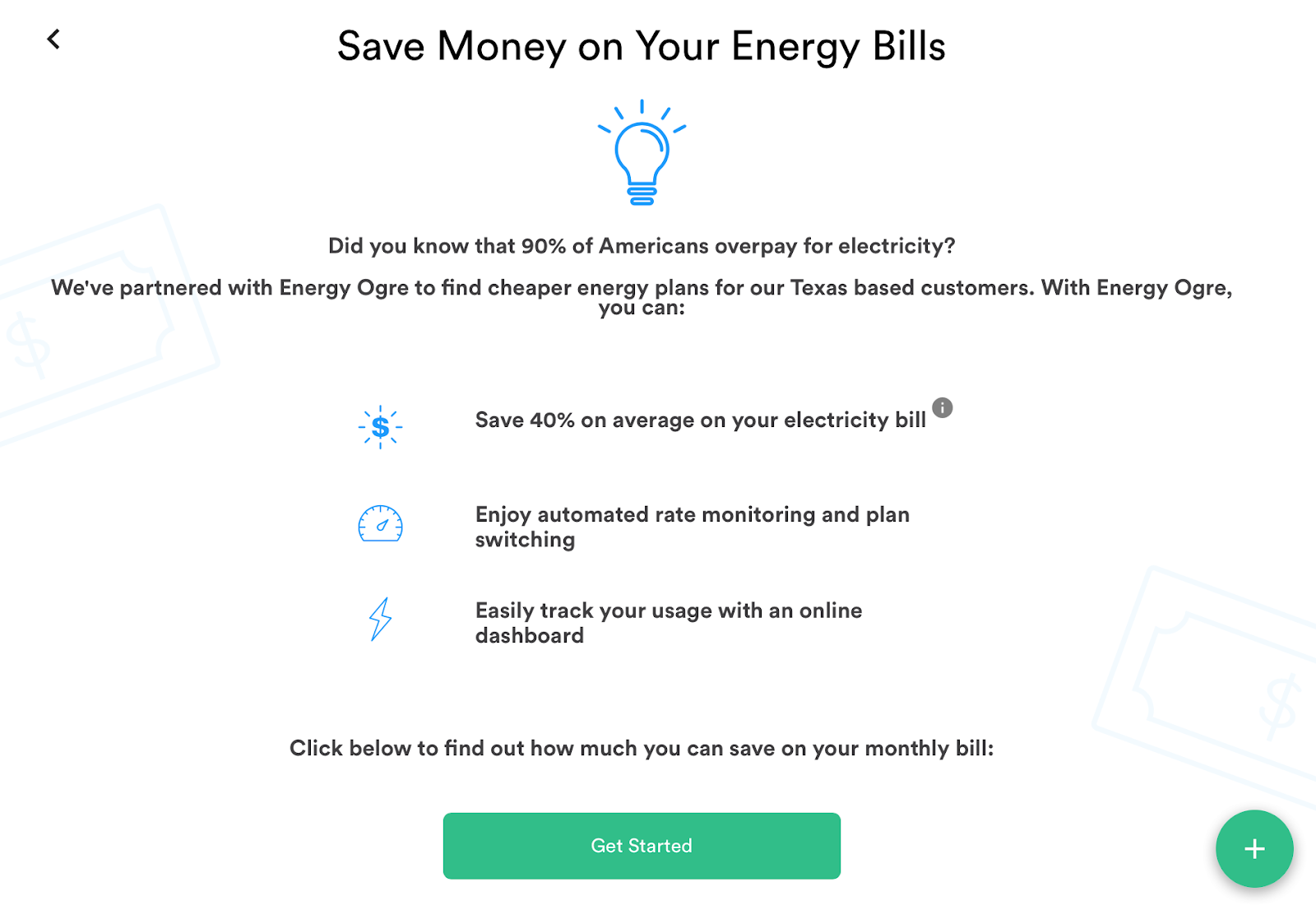
When you log into your dashboard in Trim, you can scroll through a number of ways to connect your bank accounts and find out ways to save money.
For instance, Trim offered me a way for you to save money on my energy bills — on average, 40 percent, it claims.
Trim has partnered with Energy Ogre for this promotion. However, when I clicked the “Get Started” button, I got an “error” message.
3. Car Insurance
There is also a car insurance optimizer that would ideally save you money on insurance, but it’s currently on a waitlist.
4. Trim Concierge: Pay What You Think is Fair

You can chat with a financial coach to get the most out of your money. It asks you a series of personal questions to help get an idea of what your financial situation looks like.
There were many demographic questions, such as questions about your age, where you live, and how much you earn. It also asks if you need any subscriptions or bills renegotiated.
At the end of the series of questions, it creates an assessment of your responses. Then it asks you to pay what you think is fair to chat with a human financial coach.
They offer a 30-day money-back guarantee, and you can cancel at any time. If your bank account is linked, it takes the fees from that account.
Downsides of Trim
Trim negotiated with companies to save you money, but it was definitely not perfect. You may have needed to do some work on your own (like calling the companies yourself if they didn’t accept Trim’s negotiation).
Trim supports more than 15,000 U.S. financial institutions, but if it doesn’t support your bank, you won’t be able to use Trim.
Alternatives to Trim
There is one other company that is very similar to Trim, which is called Rocket Money. They state that the average member saves $180 per year using their service.
One great thing about Rocket Money is that you only pay a fee if they successfully lower one of your bills.
Summary
Overall, Trim as reviewed here no longer exists. It is now OneMain MyMoney. If you are a OneMain loan customer or a Brightway credit card customer, you can use MyMoney free for bill negotiation and done-for-you subscription cancellations. Everyone else can use MyMoney free to find and track subscriptions, and cancel them themselves.
Its best feature was bill negotiation — getting that $25 discount on my Comcast bill convinced me Trim was legit. That service now lives on only for OneMain loan and Brightway credit card customers in OneMain MyMoney. If that is not you, look at the Alternatives section above, including Rocket Money, for help cancelling subscriptions and negotiating bills.
Recommended Reading