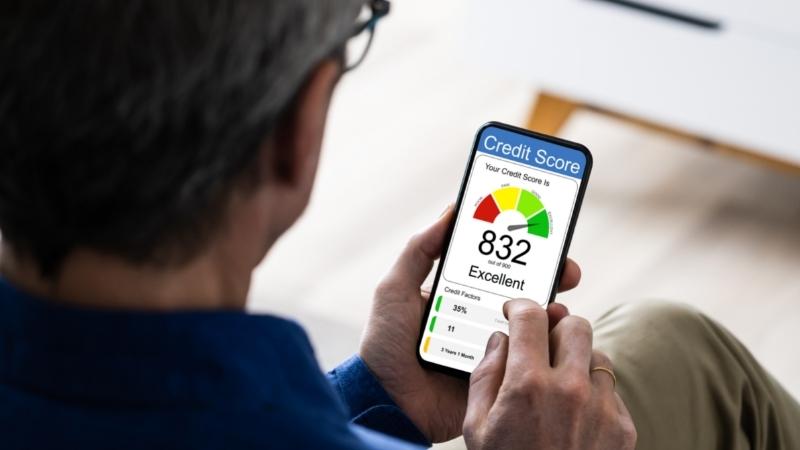
I built my credit in college thanks to a credit card that offered free stuff for signing up. My card had a $500 limit, and like a typical 18-year-old, I maxed it out quickly. I had a part-time job, though, and paid it off each month, so by the time I graduated, my credit was established and I opened a second card from Bank of America with a $2,000 limit.
If you don’t have that kind of head start, Self is one way to build credit and savings at the same time. I checked Self’s plans, sample APRs, fees, credit bureau reporting, Self Visa terms, customer service hours and customer ratings against Self’s website, its app store listing, Trustpilot and the BBB in November 2026, and I updated the details that have changed.

Overall Rating
Summary
Self Financial is a tool that you can use to help work on your credit history and savings at the same time.
-
Ease of use
4.5
-
Work on your credit
4
-
Fees
3.5
-
Interest rates
3
Pros
- Work on your credit
- Credit monitoring included
- Establish savings
Cons
- High interest rates
- Additional fees
Quick answer
Yes, Self is a legit and useful credit builder if you can make every payment. Its Credit Builder Account is a small 24-month loan held in a CD, with payments from $25 a month and sample APRs of 15.51% to 15.92%, and Self reports your payments to all three credit bureaus. You get your savings back at the end minus interest and fees, and Self doesn’t guarantee a higher score.
Table of Contents
Is Self Legit?
Yes. Self (Self Financial, Inc., formerly known as Self Lender) is a real fintech company, and its Credit Builder Accounts are made by partner banks: Lead Bank, Sunrise Banks, N.A. or First Century Bank, N.A., each Member FDIC. Self reports your payments to all three major credit bureaus, and its app has a 4.8 out of 5 rating from about 340,000 ratings on the Apple App Store.
It’s a legitimate way to build credit, but it isn’t free. You pay interest on a small loan, and Self says plainly that it doesn’t guarantee a higher score and won’t remove negative items from your credit report.
Self at a Glance
| Feature | Details (Nov 2026) |
|---|---|
| Product | Credit Builder Account (a loan held in a CD) |
| Monthly payment | $25, $35, $48 or $150 |
| Term | 24 months |
| Sample APRs | 15.51% to 15.92% |
| Admin fee | Variable, $1 to $5 may apply |
| Credit bureaus | Equifax, Experian and TransUnion |
| Credit check | No credit check or credit score required |
| Self Visa | $0 annual fee the first year, then $25 |
| Rent and bill reporting | $6.95 a month |
What Is Self?
Times have changed since I was in school. The Credit CARD Act of 2009 bars card issuers from offering students free gifts on or near campus to get them to apply, so that easy path to a first card is gone.
Credit is a catch-22. You need established credit to qualify for more of it, but how do you get it in the first place, and what if you have bad credit? This is where Self shines.
Self helps you build a positive payment history with a Credit Builder Account. It’s a small loan that you don’t get up front. Instead, the money goes into a certificate of deposit (CD) in your name at one of Self’s partner banks, and you pay the loan off each month. Your payments are reported to the credit bureaus, and when the term ends, you get the money in the CD back, minus interest and fees. It’s a credit builder that lets you build credit and savings at the same time.
Self also offers the secured Self Visa credit card, rent and bill reporting and free credit monitoring.
How Does Self Work?
1. Apply
You apply on Self’s website or app. Self doesn’t run a credit check and doesn’t require a credit score, so it’s open to people with bad credit or no credit at all, though accounts are still subject to approval.
You’ll need to be at least 18 and a permanent U.S. resident with a Social Security number, and you’ll need a bank account or debit card to make payments.
2. Choose a Credit Builder Account

Self offers four Credit Builder Accounts, so there’s an option for most budgets. Each plan lasts 24 months, and the monthly payment is $25, $35, $48 or $150.
A bigger plan won’t necessarily build your credit faster. Pick a monthly payment that fits comfortably in your budget, since on-time payments are what count, and think about how much you’d like to have saved at the end.
3. Make Your Monthly Payments
Each month, you make a payment toward the loan. You can set up AutoPay from your bank account so you don’t forget a payment. Paying from a linked bank account avoids the convenience fee Self charges for debit card payments.
If a payment is late, you’ll pay a late fee. Self has said late fees start after a 15-day grace period, and recent reviews put the fee at up to 5% of your monthly payment. Self doesn’t report a payment as late to the credit bureaus until it’s 30 days past due, but once it does, that late payment can hurt your score.
4. Get Your Savings Back
When you’ve made all your payments, the account closes and Self releases the money in your CD, minus interest and fees. Self says payouts generally arrive within about three weeks by check or direct deposit.
This forced savings plan can be a great way to start an emergency fund. When your term ends, you can move the money to a high-yield savings account so it keeps growing.
How Much Does Self Cost?
It’s free to sign up, but you’ll pay interest on the loan. Self’s current sample loans all have 24-month terms:
| Monthly payment | Total of 24 payments | Sample APR |
|---|---|---|
| $25 | $600 | 15.92% |
| $35 | $840 | 15.69% |
| $48 | $1,152 | 15.51% |
| $150 | $3,600 | 15.82% |
Self says the maximum APR on its loans is 15.92%, and a variable admin fee of $1 to $5 may apply. Older Self examples included a $9 admin fee, so check the terms shown when you apply. Because your payout is your payments minus interest and fees, you’ll always get back less than the total you paid in. Check Self’s pricing page for the exact amounts before you sign up.
Other costs to know about:
- Debit card payments: a convenience fee applies. Linking a bank account avoids it.
- Late payments: a late fee after the grace period, and late payments reported after 30 days.
- Closing early: an early withdrawal penalty of less than $1 may apply, and you still pay the interest that has built up.
Self Visa Credit Card
Self also offers the secured Self Visa credit card. You can qualify without a hard credit pull, and Self says you may be able to use money you’ve already paid into your Credit Builder Account as your security deposit.
To be eligible, Self says you need an active Credit Builder Account in good standing, three on-time payments, at least $100 in savings progress and to meet its income requirements. The card has a $0 annual fee for the first year, then $25 a year. Its variable APR was 27.74% as of October 1, 2026, so pay your balance in full each month to avoid interest.
The card is issued by Lead Bank, First Century Bank, N.A. or Sunrise Banks, N.A., each Member FDIC. Like the Credit Builder Account, it reports to all three credit bureaus.
Other Self Features
Rent and Bill Reporting
For $6.95 a month, Self can report your rent, cell phone, water, electricity and gas payments. Rent is reported to Experian, Equifax and TransUnion, while utility and cell phone payments are reported to TransUnion only. Self notes that you may not see a higher score from this feature.
Free Credit Monitoring
You can sign up with Self for free to check your credit score and get alerts when your credit report changes. Self’s score is based on VantageScore 3.0, which can differ from the FICO scores many lenders use.
Customer Service
You can call Self at 877-883-0999 from 7 a.m. to 7 p.m. Central time, Monday through Friday. Chat support is available from 7 a.m. to 9 p.m. Central on Saturday and Sunday, and Self’s help center is at support.self.inc. You can also reach customer service from the menu in the Self app.
How Much Does Self Build Your Credit?
Payment history makes up 35% of your FICO score, so a record of on-time payments on all three of your credit reports can make a real difference. Self says customers who started with a VantageScore 3.0 under 600 and made on-time payments saw their score rise by 47 points on average by month 12, based on a 2025 TransUnion study.
Self also says results will vary and that it doesn’t guarantee a score increase. Building good credit doesn’t happen right away, and it can take 6 to 12 months to notice a difference in your score. If you’re responsible, make on-time payments and keep your credit card balances low, your score should improve over time.
What Others Are Saying About Self
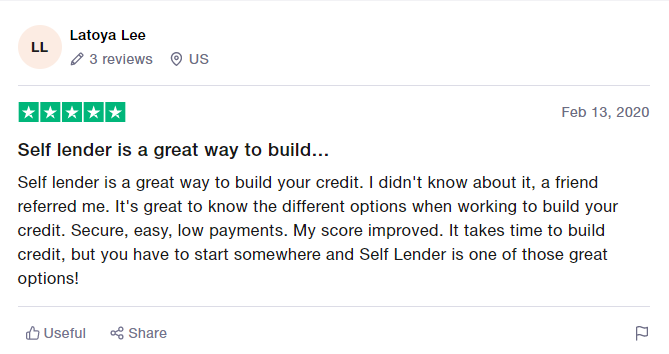
Self has a Trustpilot rating of 4.1 out of 5 from more than 2,200 reviews, which Trustpilot labels “Great.” About 69% of reviewers gave it five stars, and 18% gave it one star. Most of the negative reviews are about fees or disappointment with score changes.
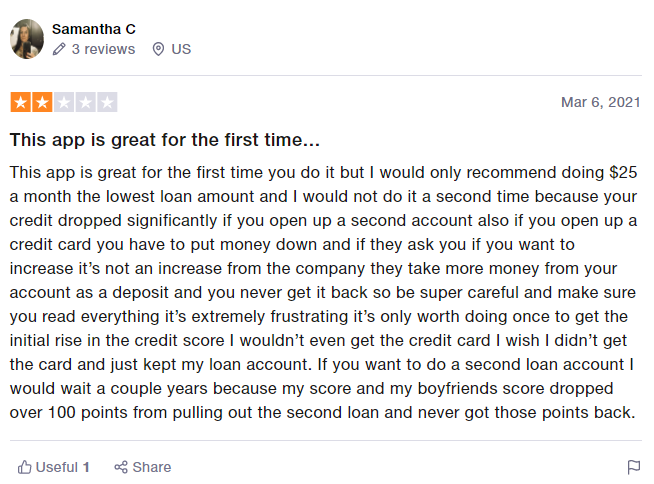
The Better Business Bureau doesn’t currently rate Self. Its profile says Self isn’t BBB accredited and is “Not Rated” because the business is in the process of responding to previously closed complaints. The BBB complaints are similar in nature to those on Trustpilot.
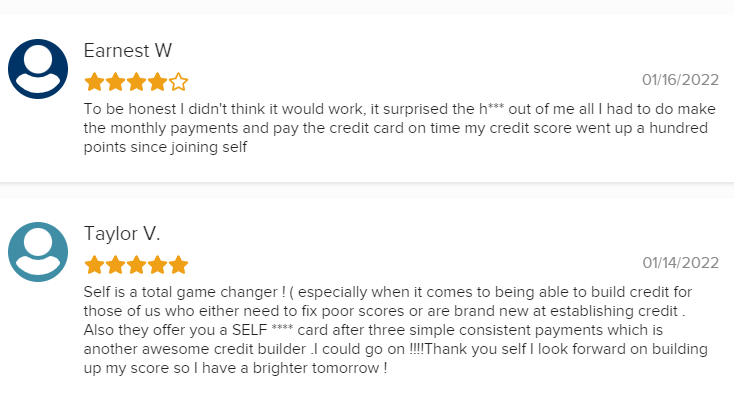
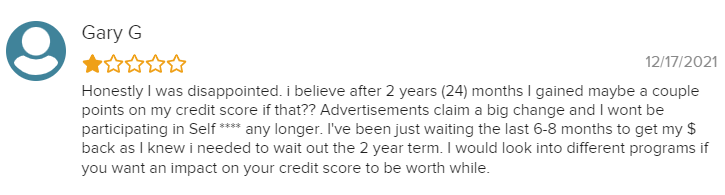
It’s a good idea to read reviews on sites like Trustpilot and the BBB before you do business with a new company, so you can see how it handles problems.
Is Self Worth It?
The idea behind Self is awesome, because it’s a credit builder that lets you build credit and savings at the same time. If you’re committed to making every payment and keeping the account open for the full 24 months, Self can help you build your credit score while you save.
However, if there’s a good chance you’ll want to close the account early to get at the money you’ve saved, you may want to avoid Self. You’ll pay interest along the way and build less payment history. And with APRs around 16%, Self can cost more than a no-annual-fee secured card you pay in full each month or a free tool like Experian Boost.
Alternatives to Self
1. Extra Debit Card
Our favorite alternative to Self is the Extra debit card. Extra works with your existing checking account to help you build credit without a credit check or interest.
When you use the Extra card, Extra covers the purchase with a line of credit, called Spend Power, and then pays itself back from your linked bank account. It reports your activity to Experian and Equifax (not TransUnion). Membership costs $20 a month or $149 a year, and the Rewards plan, at $25 a month or $199 a year, earns up to 1% in points on everyday purchases.
2. Kikoff
Kikoff gives you a credit line you can only use in the Kikoff Store and reports it to all three bureaus. Plans cost $5, $20 or $35 a month with no interest and no hard credit check, but unlike Self, you don’t get your payments back as savings.
3. Grow Credit
Grow Credit gives you a virtual Mastercard to pay subscriptions like streaming services and reports those payments to all three bureaus. Its Build plan is free for people who qualify, and paid plans cost $3.99 to $12.99 a month. For more options, see our list of the best credit building apps.
Frequently Asked Questions
Is Self a good way to build credit?
It can be, if you make every payment on time and keep the account open for the full term. Self reports to Equifax, Experian and TransUnion and turns your payments into savings. The trade-off is interest, with sample APRs of about 15.5% to 15.9%, and late payments are reported too.
How much does Self raise your credit score?
Self says customers who started with a VantageScore 3.0 under 600 and paid on time saw an average 47-point increase by month 12, based on a 2025 TransUnion study. It also says results vary and it doesn’t guarantee a score increase. Your result depends on the rest of your credit history.
How much does a Self account cost?
Plans cost $25, $35, $48 or $150 a month for 24 months. Self’s sample APRs range from 15.51% to 15.92%, and a variable admin fee of $1 to $5 may apply. At the end, you get your savings back minus the interest and fees you paid.
Can I close my Self account early?
Yes. Self lets you pay off or close your account at any time, and it releases your savings minus interest, fees and an early withdrawal penalty of less than $1. Closing early means less payment history on your credit reports, so it may not help your score as much.
Does Self do a credit check?
No. Self doesn’t run a credit check or require a credit score to open a Credit Builder Account, though accounts are subject to approval. The secured Self Visa card also has no hard credit pull, but you need three on-time payments, $100 in savings progress and to meet income requirements.
Summary
Self is a legitimate credit builder that reports to all three bureaus and turns your monthly payments into savings. You’ll pay interest, with sample APRs from 15.51% to 15.92%, so it’s best if you can make every payment for the full 24 months. If you want some extra help building your credit, consider Self.
Self disclaimers: Credit Builder Accounts and Certificates of Deposit are made/held by Lead Bank, Sunrise Banks, N.A. or First Century Bank, N.A., each Member FDIC. Subject to approval. The secured Self Visa Credit Card is issued by Lead Bank, First Century Bank, N.A. or Sunrise Banks, N.A., each Member FDIC. Sample loans: $25/mo, 24 mos, 15.92% APR; $35/mo, 24 mos, 15.69% APR; $48/mo, 24 mos, 15.51% APR; $150/mo, 24 mos, 15.82% APR. See self.inc for details.