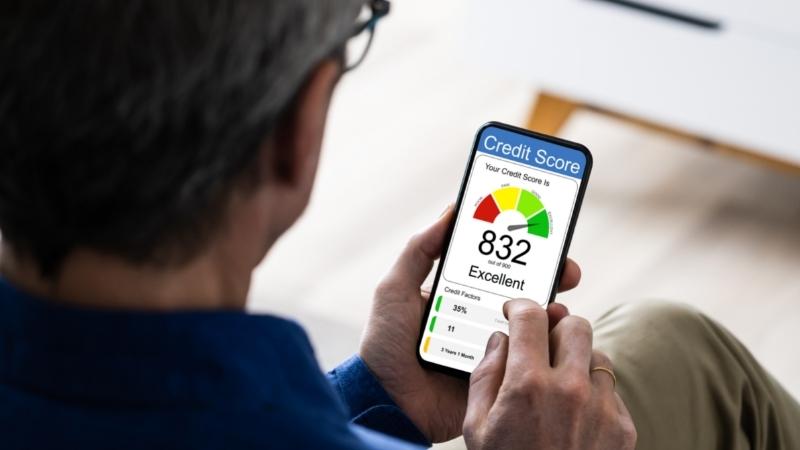
If you want to safeguard your financial health, it is critical to monitor your credit record and credit score. There are numerous services you can pay for that will help you keep tabs on your credit.
Fortunately, you don’t always have to pay for these services. There are ways to monitor your credit without paying a fee. In this article, we’ll explain exactly what a credit report and credit score are, why it’s important to keep tabs on your credit, and how you can monitor your credit for free.
Table of Contents
What Is a Credit Score?
Everyone who has used credit has a credit score. However, you may not have a credit score if you’ve never had credit or have used limited credit. That said, having a credit score can be very beneficial to you.
Your credit score is a measurement of your creditworthiness. It indicates the level of trust lenders will place in you when it comes to extending credit, and it is a critical part of your financial game plan.
These scores can be used to determine the rates you will pay for insurance, whether you will get a job, or if you’ll be approved for a housing rental unit. Credit scores are determined by credit reporting agencies. The three most popular credit reporting agencies are TransUnion, Equifax, and Experian.
Lenders use these three agencies to help them decide whether or not to lend you money, the interest rate they’ll charge you, and other factors. It’s important to understand your credit score so you can establish a good score, maintain it, or clean up bad credit if need be.
How to Understand Your Credit Score
There are two main credit scoring systems, including FICO and VantageScore. Both systems use similar criteria to determine a person’s credit score.
When determining your credit score, FICO evaluates your:
- Payment history: 35%
- Amounts owed (also called “Credit Utilization Ratio”): 30%
- Length of credit history: 15%
- Number of new credit accounts: 10%
- Credit mix (i.e., types of credit): 10%
VantageScore lays out its criteria a bit differently:
- Payment history: Highly influential
- Length/type of credit: Highly influential
- Credit Utilization Ratio: Highly influential
- Total of credit balances/debt: Moderately influential
- Available credit for use: Less influential
- Recent credit behavior/new credit: Less influential
Each scoring system uses its own criteria to determine your credit score. The credit scoring ranges for each system were different at one time.
Recently, VantageScore changed its numbering system to match FICO’s. The total range of credit scores for both systems is 300 to 850.
Here is a breakdown of what those numbers mean in terms of creditworthiness:
- 300 to 579: Poor credit
- 580 to 669: Fair credit
- 670 to 739: Good credit
- 740 to 799: Very good credit
- 800 to 850: Exceptional credit
Knowing these ranges will help give you a good idea of how lenders view your credit record and how they might respond to a request for credit.
How Do Credit Scores and Credit Reports Differ?
Both your credit score and your credit report are valuable to you and any lenders who may want to offer you credit. However, the two credit measures differ in the information they provide.
Your credit score is a quick-glance number that gives lenders an overall picture of how you handle your credit. This is why potential employers, rental managers, and insurance companies may use your credit score as well.
You can tell a lot about how a person handles their credit as a whole simply by taking a quick glance at the person’s credit score. On the other hand, a credit report is more detailed.
Your credit report will show you information such as:
- How many credit accounts you have
- What types of credit accounts you have (i.e., credit cards, loans, mortgages)
- How long you’ve had each account
- What the balances are on each account
- Whether an account is open or closed
- Payment history (whether payments are on time or late)
- Debt collection or write-off history
- Any bankruptcy or other financial reportings
- Information about credit inquiries
Knowing the detailed information contained in your credit report can help you keep a better eye on your financial health.
You can pay money to monitor your credit report and score. However, you don’t always have to pay to get this information on a regular basis.
Ways to Monitor Your Credit for Free
While some companies will charge you to see your credit report or to monitor it regularly, there are ways to monitor your credit for free.
Consider these ideas for monitoring your credit report at no charge.
1. Use SoFi Relay
Lending company SoFi recently launched a new product called SoFi Relay. SoFi Relay works similarly to Empower. It helps you gather all of your financial information in one place, free of charge.
When you link your bank, investment, and credit accounts to your free SoFi Relay account, you can see a snapshot of your overall financial health. You can track your spending, set financial goals, and monitor your credit score as well as your credit report for free.
There are also learning tools on SoFi Relay that can help you better understand what impacts your credit score.
2. Try AnnualCreditReport.com
Annualcreditreport.com is another avenue for monitoring your credit for free. Just head over to the website to get free copies of all three credit bureau reports.
One downside to Annualcreditreport.com is that, although you get all three credit reports for free, you do have to pay money to get your actual credit score. Also, you can only get your free credit report from Annualcreditreport.com one time per calendar year.
To track your credit throughout the year using this service, request one report at a time. If you get one report every four months, you’ll be able to monitor your credit consistently throughout the year.
3. Take Advantage of Tools From Your Bank
Depending on where you bank, you might be able to use your bank’s tools to monitor your credit for free. Some banks share access to your credit score as a courtesy when you bank with them. You might even find tools to track your spending at your bank.
Check your bank’s website for details, or see our post on the best free checking accounts to learn more about banks that provide extra services to help you better manage your money.
Why Is It Important to Monitor Your Credit?
Monitoring your credit is important for many reasons. One key reason to keep tabs on your credit report is to watch for fraudulent activity. The Federal Trade Commission’s Consumer Sentinel Network report of 2019 showed that there was $135 million lost to credit card fraud that year alone.
I had my own experience with credit card fraud a few years ago when a $1,500 resort charge showed up on one of my credit cards. You can imagine my panic when I checked my credit card balance and saw it was $1,500 higher than expected.
Fortunately, because I monitor my accounts regularly, I was able to get the transaction reversed quickly and easily. Keeping an eye on your credit report and your credit card transactions will help you quickly shut down attempts at fraud.
You’ll be able to see if card balances are higher than they should be, if there are applications for new credit, or if there are other unexpected changes to your credit picture.
Another reason to monitor your credit is to keep an eye on your financial health. In today’s largely cashless society, it’s easy to just “swipe and forget” when it comes to spending money.
If we’re not careful, we can find credit card bills rising higher than we realize. Within a few weeks, we can end up in more debt than we anticipated. Monitoring your credit regularly helps you ensure you are aware of what your credit card balances are, so you can (ideally) pay them in full every month.
Best Practices for Checking Your Credit Score
Here are some steps you can take that will better enable you to monitor your credit score and be on the lookout for red flags.
Monitor Your Credit Health Regularly
Whether you use a free service like SoFi Relay or pay to monitor your credit, it’s important to regularly check your credit health. ”Regularly” means different things to different people. You’ll need to determine what works best for you, but you should consider monitoring your credit health quarterly.
Keep track of your credit score and whether it is rising, falling, or holding steady. If there are negative changes to your credit score, find out why.
Some reasons for a falling credit score can include:
- Increasing credit card balances
- Late or non-payment on cards
- Opening too many new credit accounts
Services like SoFi Relay can help you understand changes in your credit score and why they may have occurred.
Watch Out for Scams
Another best practice for checking your credit score is to watch for scams. The FTC reports that there are scam websites out there that will offer to help you check your credit report and score.
Many of these unscrupulous sites will promise a free report and score. However, if you read the fine print, you’ll find out that you will pay hefty fees for using their services.
In addition, these types of scam artists will often sell your personal information for profit, leaving you vulnerable to heaps of junk mail, online solicitations, and worse.
Trustworthy companies such as SoFi will never compromise your data or personal information or sell it for profit.
Practice Smart Credit Habits
Lastly, it’s important to regularly practice smart credit habits when you are implementing best practices for credit monitoring.
Create and Use a Budget
One key strategy you can use is to create a budget that actually works and commit to following it. Tweak it as you learn about your purchase habits and adjust them as needed.
SoFi Relay includes a budgeting app that can help you create a budget to better manage your money. Money that’s managed well leads to smart credit habits and a better credit score.
Be Intentional When Using Credit Cards
Another smart practice when it comes to credit monitoring is to be intentional about how and when you use your credit cards.
For instance, if you’re using them to earn points, be sure to stay within your allotted spending budget and pay off the credit card each month.
Better yet, use a debit card that pays you cash back and withdraws funds directly from your checking account. Doing so can help ensure you get rewards without overspending.
Have Regular Financial Assessment Meetings
Another smart credit habit is to have regular financial meetings to assess your overall financial situation.
This is especially important if you share your money with a partner. Choose to sit down monthly, quarterly, or semi-annually and assess all of your financial accounts.
These accounts include the following:
- Bank accounts
- Credit accounts
- Loan accounts
- Home mortgage products
- Investments
- Retirement accounts
- Your credit reports
Be sure that the numbers and balances look as you’d expect. If you’re working with a partner, make sure you both understand your financial situation.
Talk about what your financial goals are and how you might be able to achieve them.
Work to see that your financial goals and plans are on track. Change your financial goals when needed, such as when you change jobs or face other disruptions.
Design a plan for any changes that might need to be made, and put that plan into action with designated steps.
Summary
Regularly monitoring your credit is important. That said, there’s no reason to spend money to track your credit when it’s possible to do so without paying a fee.
Use products like SoFi Relay to safely keep regular tabs on your credit report and your credit score so you can ensure your financial stability.
Sofi Disclosure: “SoFi’s Relay tool offers users the ability to connect both in-house accounts and external accounts using Plaid, Inc’s service. When you use the service to connect an account, you authorize SoFi to obtain account information from any external accounts as set forth in SoFi’s Terms of Use. SoFi assumes no responsibility for the timeliness, accuracy, deletion, non-delivery, or failure to store any user data, loss of user data, communications, or personalization settings. You shall confirm the accuracy of Plaid data through sources independent of SoFi. The credit score provided to you is a VantageScore® based on TransUnion® (the “Processing Agent”) data.”