
Vintage and antique goods can bring good money if you’re selling the right items to the right buyers. In my experience, selling to a local antique shop gets you fast money, but not necessarily the most cash. Shops buy with the hope of reselling at a profit, so most will make you a lowball offer.
Below are 15 places to sell antiques locally and online, what each one charges and which kinds of items sell best where. I checked every site’s fees and rules against its own pages (or a current guide where a site blocked me) in November 2026.
Quick answer
The best places to sell antiques locally are antique shops and malls, consignment stores, auction houses, estate sale companies and free local apps like Facebook Marketplace, Craigslist and OfferUp. To reach more buyers, sell online on eBay (13.6% fee in most categories), Etsy for items at least 20 years old, Chairish for vintage furniture and decor, or Ruby Lane if you sell regularly. Local shops pay fastest, but you’ll usually get more by researching sold prices and selling to collectors directly.
Table of Contents
Best Places to Sell Antiques at a Glance
| Place | Best for | What it costs you (as of November 25, 2026) |
|---|---|---|
| Local antique shop | A fast, simple sale | Nothing, but expect a lowball offer |
| Consignment store | Furniture and decor you can wait on | Commission, often 20% to 40% or more |
| Auction house | Valuable pieces and whole collections | Seller commission set by the auction house |
| Estate sale company | Clearing a whole house | A share of the sale, set by contract |
| Facebook Marketplace | Local buyers for big items | Free for local pickup; 10% (min. $0.80) on shipped orders |
| Craigslist | Local sales with no fees | Free for most by-owner posts |
| OfferUp | Local, in-person sales | No fees on local sales |
| eBay | The biggest online audience | 13.6% in most categories plus $0.30 or $0.40 per order |
| Etsy | Vintage items 20+ years old | $0.20 per listing, 6.5% transaction fee, 3% + $0.25 processing |
| Chairish | Vintage furniture, art and decor | 40% commission on the free plan |
| Ruby Lane | Serious sellers with 10+ items | $45 a month plus a 9.9% fee on the first $2,500 |
| Bonanza | Lower fees than eBay | 11% or more per sale, $14.99 setup fee |
How to Get the Most for Your Antiques
Before you sell, a little homework can make a big difference in what you get. Generally, an item has to be about 100 years old to be called an antique, while “vintage” usually means at least 20 years old. Either way, condition, rarity and demand matter more than age alone.
- Look up sold prices: Search eBay for your item and filter by sold listings to see what buyers actually paid, not just what sellers are asking.
- Get an appraisal for valuable pieces: If you think something is worth a lot, pay a qualified appraiser before you sell. It’s the same idea as a jewelry appraisal.
- Clean gently, don’t refinish: Dust and light cleaning help, but refinishing furniture or polishing old metal can wipe out much of its value.
- Take good photos: Shoot in natural light, show every side, and include close-ups of maker’s marks, signatures and any damage.
- Know your bottom line: Decide the lowest price you’ll take before you talk to a buyer or a shop.
Where to Sell Antiques Locally
Selling locally is often the best choice for furniture and other big, fragile pieces that cost a lot to ship. The types of items each store or venue accepts vary, so read the fine print or call ahead. You can also try these apps for selling online or locally.
1. Local Antique Shops
Selling outright to an antique shop is the fastest option, but because the shop has to resell at a profit, you won’t get top dollar.
If you have a lot of antiques, there’s another way to make money with a shop: rent space in it. Many antique malls and shops rent booths to dealers, who display their items at prices they set. Customers come in and buy, and the shop handles the sale.
Some people turn this into a business, buying antiques at estate sales, garage sales, flea markets and auctions and reselling them from a booth. If you have plenty of antiques to sell, or you’d like to make a business of it, ask local shops about becoming a dealer.
2. Consignment Stores
Consignment stores sell your item for you and keep a share of the price. Here’s how it usually works:
- You bring your vintage or antique item to the store.
- The store assesses and prices it.
- The item is displayed in the store.
- When it sells, you and the store split the money.
Depending on the store, the commission might be 20%, 30%, 40% or more of the sale price. Each store sets its own rules, so read the agreement before you leave anything. Check how long it will display your item, what happens if it doesn’t sell and whether you’ll owe the store anything. For ideas, see our list of the best consignment shops.
3. Auction Houses
An auction house is a good fit if you have a large number of antiques or a few highly valuable ones. The auction house advertises the sale to attract bidders, runs the auction and takes a commission from what your items sell for. Many also hold online auctions, which can reach collectors far beyond your area.
Auctioneers have every reason to push prices up, since their cut grows with the final bid. Still, what you get depends on who shows up and whether they want what you’re selling. Ask about the seller’s commission and any fees for photos, insurance or shipping before you sign, and ask whether you can set a reserve (a minimum price).
4. Estate Sale Companies
If you’re clearing out a whole house full of antiques, such as after a move or the loss of a family member, an estate sale company can price everything, run the sale and handle the crowds. In return, it keeps a share of the sales under your contract. Interview more than one company, ask for references and get the commission, fees and timeline in writing.
5. Flea Markets
Flea markets are a good option if you have many antiques to sell, or a mix of antiques and other items. You can rent a booth or table at a permanent flea market near you, or join a traveling market when it comes to town. Most charge rent for the space. Here are more ways to make money at a flea market.
6. Yard Sales
A yard sale works best for lower-priced antiques. To draw the most shoppers, hold yours during a citywide or neighborhood-wide sale, or team up with neighbors for a multi-family sale, since shoppers expect to find more.
Be flexible when pricing. People love a bargain, so leave a little wiggle room, and decide in advance how low you’ll go. Would you rather keep the item than take less, or is the goal simply to get rid of it? Shoppers who know what to look for at garage sales will spot underpriced antiques fast, so price valuable pieces carefully.
7. Pawn Shops
Pawn shops make loans against items, but most will also buy them outright. Bring your antiques in, make it clear you want to sell rather than pawn, and ask what they’ll pay.
Pawn shops have to buy low to resell at a profit, so you’ll usually get less than you would selling online. They’re best for quick cash, especially for jewelry, coins, watches and other small valuables.
8. Facebook Marketplace
Facebook is fast becoming one of my favorite places to buy and sell. Selling locally on Facebook Marketplace is free when the buyer picks up the item and pays you in person. If you ship an item through Marketplace checkout, Facebook charges a selling fee of 10% of the order total, with a $0.80 minimum.
You can post an item to your own Facebook friends, which means you’re usually dealing with people you know, or list it on Marketplace, where everyone nearby can see it. Marketplace gives you a much bigger audience. Buyers need a Facebook account, so you can look at their profile before you meet, but still meet in a public place and take cash or a payment app you trust.
9. Craigslist
Craigslist is nice for selling antiques because most for-sale-by-owner posts are free, and your buyers will be local. That means you don’t have to ship anything, which is a big plus for furniture.
The market varies by area. In my major metropolitan area, there were thousands of antique items listed for sale, but your area may be different. Get tips in our guide to selling stuff on Craigslist fast, or try these sites that are similar to Craigslist.
10. OfferUp
OfferUp works a lot like Craigslist, with an app made for buying and selling locally. There are no fees for local sales. OfferUp ended nationwide shipping in fall 2025, so it’s now strictly for local, in-person sales. You can message buyers in the app without sharing your phone number, and buyer ratings help you judge who you’re dealing with. See our OfferUp review for more.
Where to Sell Antiques Online
Selling online reaches far more collectors than you’ll find locally, which often means a higher price for rare or unusual pieces. The trade-off is fees and shipping, so pack fragile items carefully and insure anything valuable.
11. eBay
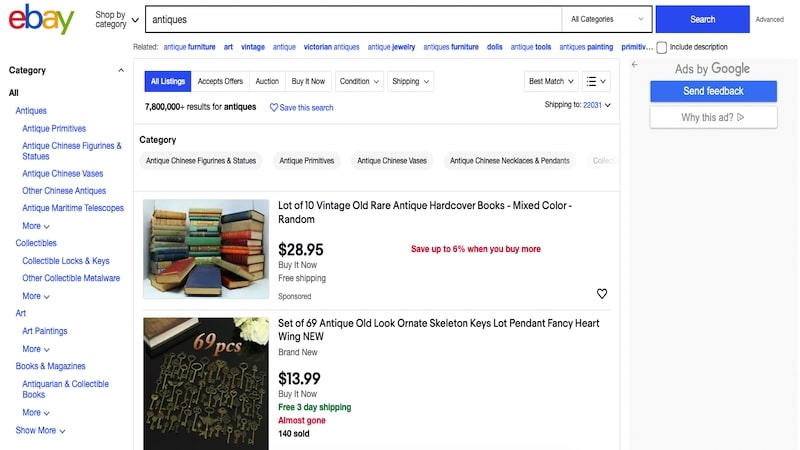
eBay is the old standby for selling antiques and other items, and its reach is its biggest advantage. eBay reported 147 million active buyers worldwide (including its Depop and Tise marketplaces) for the quarter ended September 30, 2026, so your antiques get massive exposure.
If you sell as an individual, your first 250 listings each month are free, then most categories cost $0.35 per listing. When an item sells, you pay a final value fee of 13.6% of the total sale in most categories (up to $7,500 per item, then 2.35% on the amount above that), plus $0.30 per order for orders of $10 or less or $0.40 for orders over $10. Business sellers can choose an eBay Store plan instead.
12. Etsy
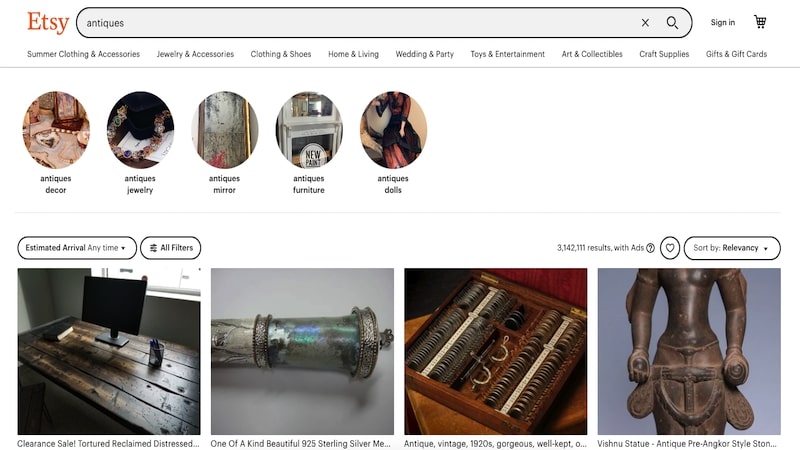
Etsy is known for handmade goods, but it also lets people sell vintage items, which Etsy defines as at least 20 years old. If your antiques meet that rule, they fit Etsy’s vintage category. If they’re newer than 20 years, you technically can’t sell them there. Etsy is also a top spot to sell handcrafted items.
Vintage items that sell well on Etsy include:
- Clothing
- Books, movies and music
- Home decor
- Jewelry and accessories
- Toys and games
Etsy’s fees are $0.20 to publish a listing (it lasts four months or until it sells) and a 6.5% transaction fee on the sale price, including the shipping you charge. In the U.S., Etsy also collects a payment processing fee of 3% plus $0.25 per sale, and some new sellers pay a one-time shop setup fee.
13. Chairish
Chairish is an online marketplace for vintage and antique furniture, art, lighting and decor, so the buyers there are looking for exactly what you have. Chairish can handle shipping for you, or you can offer local pickup.
As of November 2026, the free Consignor plan (1 to 9 active listings) takes a 40% commission on vintage and antique items. Sellers with 10 or more listings can use the free Professional plan (30%) or pay $49 to $99 a month for lower commissions. Chairish pays by PayPal after delivery and a 48-hour return window.
You may also see 1stDibs mentioned for high-end antiques. It’s a big marketplace, but it only accepts vetted professional dealers and doesn’t allow consumer-to-consumer listings, so most individuals can’t sell there directly.
14. Ruby Lane
Ruby Lane specializes in antiques, vintage items and collectibles, and it’s geared toward people who sell regularly. Once your shop is open, you must keep at least 10 items for sale at all times.
There’s no setup or listing fee. According to a current seller’s guide (updated October 2026, since Ruby Lane’s own fee page blocked my visit), the shop fee is $45 a month for unlimited items. When an item sells, Ruby Lane charges a tiered service fee of 9.9% on the first $2,500, 5% on the portion from $2,500 to $7,500 and 2.5% above $7,500. The 9.9% fee also applies to what the buyer pays for shipping and insurance. Ruby Lane considers an item antique at 100 years and vintage at 20.
15. Bonanza
The Bonanza marketplace says it sells “everything but the ordinary,” which suits antiques and collectibles. New sellers pay a one-time $14.99 account setup fee when they open a booth.
When you sell, Bonanza charges a final value fee of at least 11% of the sale (with a flat 1.5% on the portion over $4,000), plus a $0.25 transaction fee per sale if you don’t have a paid membership. You can choose to pay a higher rate, anywhere from 11% to 30% depending on your settings, to have Bonanza advertise your items more widely. Since May 2025, sellers with more than 50 active listings also pay a few cents per extra listing each month, capped at $20.
Which Place Is Best for Your Antiques?
- Big furniture: Facebook Marketplace, Craigslist, OfferUp, a consignment store or Chairish (which can arrange shipping).
- Small collectibles, glass and pottery: eBay, Etsy (if 20+ years old) or Ruby Lane.
- Valuable pieces: An appraisal first, then an auction house or a specialist dealer.
- A whole house of items: An estate sale company or auction house.
- Fast cash: A local antique shop or pawn shop, if you’re willing to take less.
Selling other things too? See how to sell furniture online and locally or check our Mercari review for another easy app for small items.
Frequently Asked Questions
Where can I sell antiques locally?
Try local antique shops and malls, consignment stores, auction houses, estate sale companies, flea markets and pawn shops. Facebook Marketplace, Craigslist and OfferUp are free ways to find local buyers, which is especially handy for furniture that’s expensive to ship.
What is the best website to sell antiques?
eBay reaches the most buyers and works for almost any antique. Etsy is good for vintage items at least 20 years old, Chairish is strong for vintage furniture, art and decor, and Ruby Lane suits people who sell antiques regularly.
How do I find out what my antiques are worth?
Search eBay for similar items and filter by sold listings to see what buyers actually paid. For anything you think is valuable, pay a qualified appraiser before you sell, so you don’t accept a lowball offer.
Do antique stores buy antiques?
Many do, but they need to resell at a profit, so expect an offer well below retail value. If you have a lot of antiques, renting a booth in an antique mall or consigning items can earn you more than selling outright.
How much does it cost to sell antiques on eBay?
As of November 2026, individuals get 250 free listings a month, then pay a 13.6% final value fee on the total sale in most categories plus $0.30 per order of $10 or less or $0.40 on larger orders. The rate drops to 2.35% on the part of a sale above $7,500.
Summary
If you have antiques to sell, use the options above to get the most cash for them. What you earn depends on the audience you reach, the demand for your type of antique and the route you choose.
For quick money, sell locally to a shop or on Facebook Marketplace. For the best price on special pieces, research sold prices, get an appraisal if needed and put your items in front of collectors on eBay, Chairish, Ruby Lane or at auction. The right antique in front of the right audience can bring a healthy profit.
Looking for more ways to earn? See more guides to selling collectibles and valuables in our list of side hustle ideas.